
Over three days in Valencia, teams from the 10 FETA Escalator projects across Europe, philanthropic partners and experts in the fair energy transition explored a fundamental challenge: how not only to sound out the views of those hardest hit by energy poverty and the housing and social vulnerabilities that go with it, but to ensure that they can actually influence decisions that affect their lives.
A key insight arising from the Second Escalator Module, from October 12-14, was that trusted intermediaries play a critical role. Community workers and social services are often essential to build bridges, helping people navigate complex institutional systems, gain confidence and make their voices heard. Institutions must act on their feedback.
Together, participants identified five key challenges that we must meet if we are to deliver an inclusive transition to clean energy:
- understanding vulnerability as a changing reality, rather than a fixed category
- building trust and connection through local actors
- moving from consultation to genuine influence
- making participation relevant to people’s everyday concerns
- achieving lasting institutional change beyond short-term projects.
Through peer clinics, case studies, three memorable site visits to local initiatives and and in an overall process of collective reflection, the Valencia discussions also revealed three persistent gaps that continue to hinder progress: between accessing support and truly benefiting from it; between being asked to take part and having real decision-making power; and between commitments to inclusion and the institutional capacity to deliver on them.
The inclusion challenge
A fair energy transition requires more than technological innovation or financial support. It also involves addressing structural inequalities, recognising the value of lived experience and enabling people to influence decisions affecting their lives. Crucially, meaningful inclusion is not simply about bringing people into existing processes, but also about examining whether institutions and decision-making structures are genuinely open to influence and change.
Discussions across the module revealed a recurring dilemma: energy-related issues and participation opportunities are not always immediate priorities for the people initiatives seek to reach, particularly when health, housing or financial insecurity take precedence. Experiences of low uptake and difficulties sustaining engagement highlighted this challenge. However, limited participation does not necessarily reflect a lack of interest; mistrust, administrative complexity and competing demands may also play a role.
Five overarching themes emerged from the analysis after Valencia:
- Vulnerability is dynamic, structurally shaped and difficult to define. Fixed eligibility categories may overlook people’s diverse and changing circumstances. The discussions emphasised addressing the structural conditions that create or reinforce vulnerability, rather than treating it as an individual characteristic.
- The role of trusted intermediaries in connecting communities and institutions. Social services, community coordinators and dedicated support roles can build trust, help people navigate complex systems and bring their needs into institutional processes. Their effectiveness also depends on resources and institution’s willingness to respond.
- Moving from consultation to meaningful participation. The discussions distinguished being invited to participate from having genuine influence. Meaningful engagement involves recognising lived experience as expertise, addressing inequalities in decision-making power and demonstrating how people’s contributions inform decisions.
- Making participation accessible and relevant to people’s lives. Energy-related concerns intersect with health, housing, employment and financial insecurity. Initiatives may become more accessible and meaningful when they respond to people’s everyday priorities and reduce the practical and administrative barriers to participation.
- From project-based inclusion to lasting institutional change. Challenges around uptake, retention and project sustainability raised questions about longer-term engagement and collective mobilisation. For FETA, connecting local experiences offers opportunities to strengthen advocacy, inform policy and explore the institutional, financial and regulatory conditions for lasting inclusion.
For FETA, the findings, and the gaps they highlight, point towards a shift in focus: from encouraging people to participate in existing initiatives towards exploring how initiatives, institutions and policies can become more responsive to their needs, knowledge and priorities. Building on local experiences through collective learning and advocacy offers a direction for strengthening meaningful and lasting inclusion in the energy transition.
VALENCIA VANGUARD
During the Second Escalator Module, participants made three field trips to local energy initiatives in Valencia that take varied approaches to engaging people in vulnerable situations.
Valencia Energy Office: bringing the energy transition closer to citizens
Citizen School for the Right to Energy: building communities, not just providing advice
Requiem in Power: solar energy from cemeteries for vulnerable households
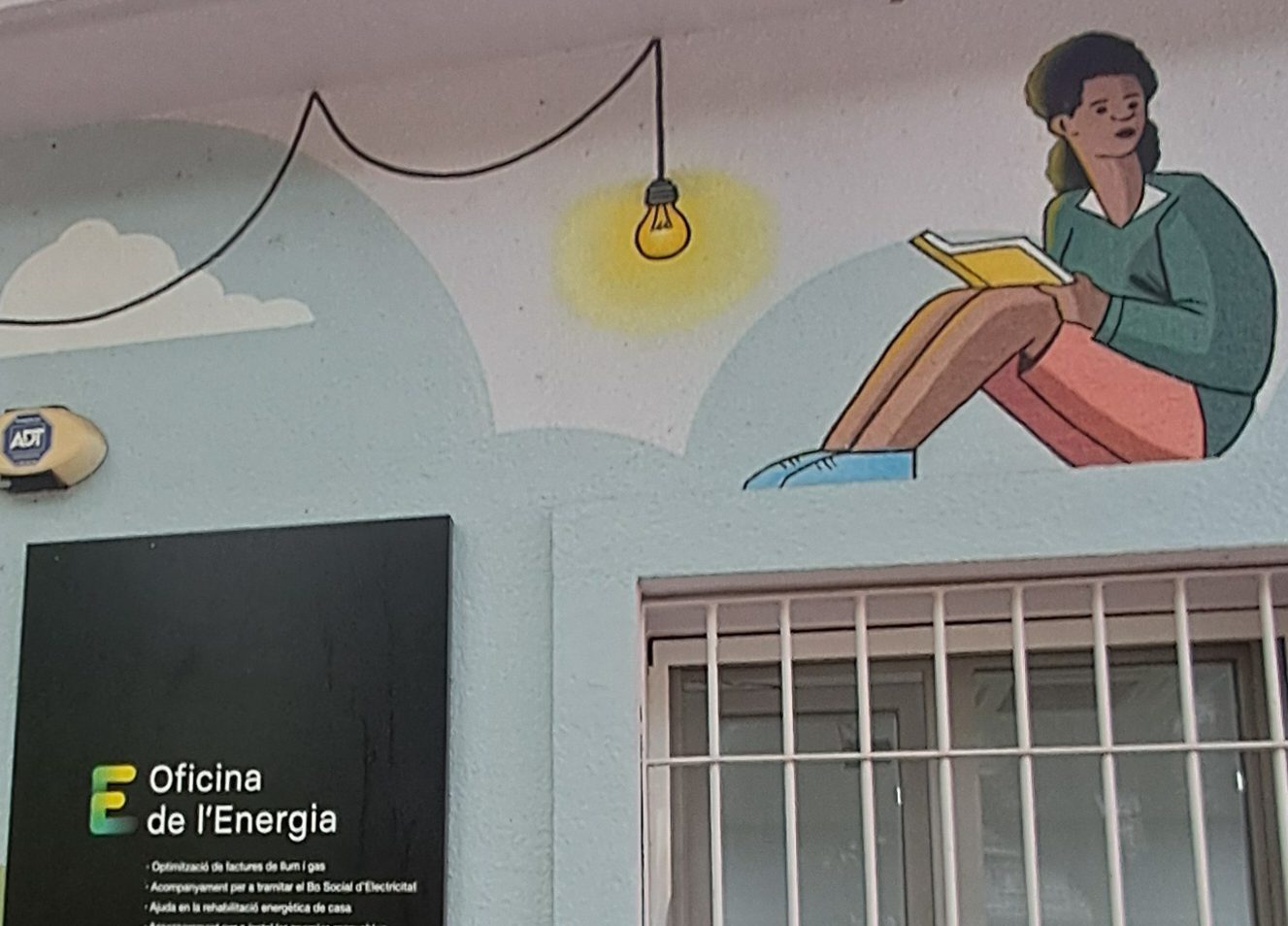
Since 2019, Valencia’s Municipal Energy Offices have helped residents navigate everything from energy bills and energy poverty to home renovation and solar energy. Operating through three permanent offices and a mobile unit, the service offers free, tailored advice while prioritising support for vulnerable households. What makes the model particularly inspiring is its role as a trusted public interface between citizens and the energy transition, combining individual support, training, community activities and citizen empowerment under one roof.
The Citizen School for the Right to Energy takes a different approach to tackling energy poverty. Rather than focusing solely on individual support, it creates welcoming community spaces where neighbours learn, share experiences and support one another. Through monthly gatherings, participants explore topics ranging from energy rights and household energy use to wellbeing and healthy living. By treating energy poverty as a collective challenge rather than a personal problem, the initiative helps strengthen community ties while empowering residents to become active agents of change. CSRE is one of FETA’s first 10 Escalator projects.
Requiem in Power (RIP) is an innovative municipal initiative that links renewable energy generation with social inclusion. Valencia has installed solar panels on five municipal cemeteries and plans to dedicate 25% of the electricity generated to households experiencing energy vulnerability. Rather than requiring residents to invest or join an energy community, the city owns and manages the installations, ensuring that vulnerable households can benefit directly from lower energy bills, energy advice and training opportunities. The project demonstrates how public renewable energy investments can become a powerful tool in the fight against energy poverty.